

Post Office Warns Louisiana and Texas Customers – ‘Treat This Like Cash’
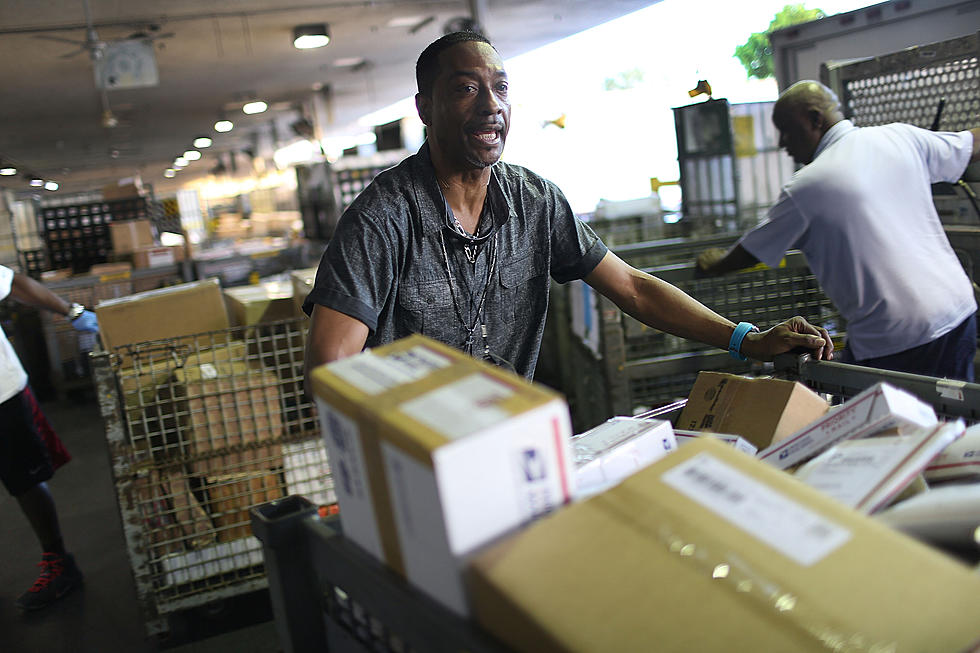
(KMDL-FM) Every day, post office vehicles zip up and down the streets of cities large and small across Louisiana and Texas. The letter carrier might make hundreds of stops in just a block or two in a city like Houston, Dallas, or San Antonio. Or they might drive in excess of a hundred miles, making stops in rural communities such as Vinton, Estherwood, and Morse in Louisiana.

Through the years, the post office has been held in high regard as the standard for perseverance. You probably remember the "through rain, through sleet..." soliloquy that is often associated with these brave couriers and their appointed rounds. But have you ever stopped to consider that maybe your postal carrier is actually delivering a scam right to your door?
READ MORE: Postal Service Confirms Major Changes in July
READ MORE: Why Would There Be a Dryer Sheet In Your Mailbox?
No, not that your letter carrier or the thousands of counterparts they have in the postal system are bad guys, but the bad guys do use our postal system for nefarious plans, and they are extremely sneaky about how they do it.
What is "Brushing" And How Does the Scam Work?
Brushing is the latest scam that is making the rounds throughout the Gulf South, including Louisiana and Texas. No, it's not a new scam, but it's been dormant for a little while, so we can only assume the bad guys have run out of ideas or this is the ne'er-do-well version of a summer rerun.
Here's how brushing works. You've been delivered a package with items you did not order. There is usually no return address, or if there is an address indicated, it's usually a third-party company with an "international" address.

The package is sent to give the impression that the recipient is a verified buyer. Then, a fake review is posted using the recipient's name. This fake review is then used to help bolster a product's rating online. This ultimately helps boost sales of the product.
Avoid QR Codes That Are Sent via Suspicious Packages
The new twist on the "brushing" scam is that the shipper also includes a QR Code. The QR Code directs the recipient to scan the code to find out "who sent the package". Naturally, the QR Code takes the recipient to a bogus website where there is an attempt to get you to submit your personal information.

And here you were thinking you had just gotten something for free from a stranger in the mail. Well, technically, you did, a case of identity theft. Here is how you can help stem the tide of more brushing and "quishing" attempts.
Instead of just tossing that bogus package in the trash and letting Waste Management handle it, you need to call the post office and report the incident. The Postal Service tracks these kinds of shipments and can use your information to help shut down future attacks.
And if you have received a "brushing" package, it's probably not an accident; somewhere, somehow, someone has gotten hold of your personal details, and they are looking to exploit them. So, it would be a good idea to monitor your personal accounts and other details of your life for suspicious activity.
LOOK: The biggest scams today and how you can protect yourself from them
More From 99.9 KTDY







![UFOs Spotted Circling Over Mamou, Louisiana [WATCH]](http://townsquare.media/site/34/files/2023/01/attachment-IMG_2768-2.jpg?w=980&q=75)